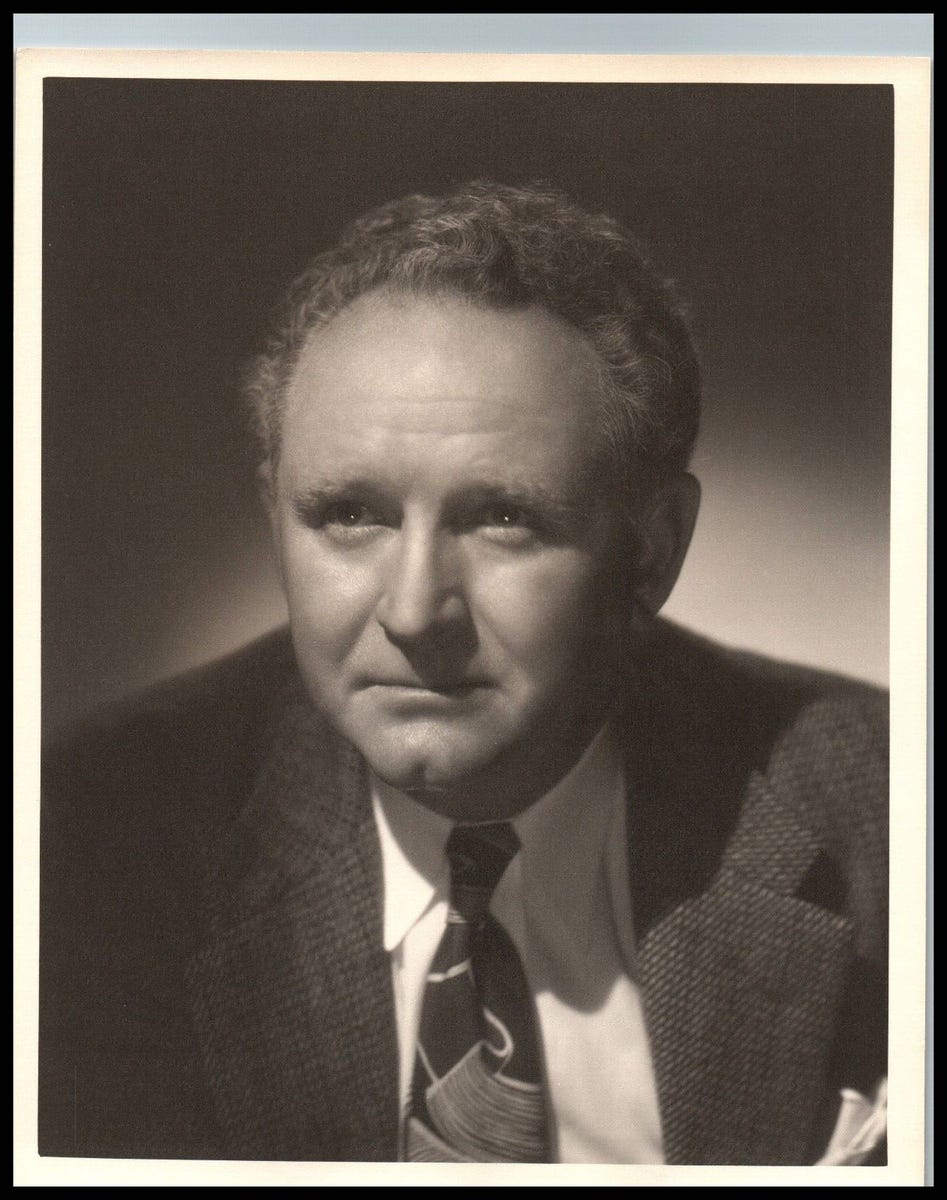
B-Boy

If I am a “fanboy” or “film bruh” or I “stan” towards anything in the movies at all, well, hold it. Let’s take a quick second for something.
It is common to rally under banners, wanting to belong not just to a fandom but project what kind within that vague community. To some limit it is fun to profile yourself into some institute, no matter how culty or accepted. Both can have equal fervor. This typically means individuals, the people that make the movies or bring us pleasure, but this can go so far down the line as to include cultural elements that go into them, such as fashion, ads, music, and so on. It declares you, and declaring is revolutionary, he said with a snigger.
Genres as well. Noir is so popular these days that obsessive devotees promote figureheads like Eddie Muller, who have practically world toured on them for years now, recruiting other notable cineastes and critics like Imogen Sara Smith. Their Film Noir Foundation, among other goodies and events, push intermittent periodicals and official of-the-month-like club memberships, in service of that Dark Gospel. For a lot of cases this becomes identity, previously thought strictly to TCM babies, but there are plenty of younger people copping various classic movie aspects. Now, I’m on twitch daily (humblebrag?) but it only recently came to my attention that there are people doing somewhat well coasting pulp gumshoe jive and listening to old jazz 45s on hardware using a black and white filter on their camera feed. I could learn something, he said with a cockle.
These are a few examples, and in some ways more than others, has benefited everyone immensely, but there are caveats sometimes…
For instance, there are the Pre-Code era works. Most are attracted to them for easy virtues and expressions that render the period mistakenly simplistic. The Pre-code era, to me, is far more than the titillation of sexually liberated men, women, and non-binarians clocking into the next ambiguous orgy. It appears that if these movies don’t have those moments or other playful naughtinesses they are not worth it or their place, and that bothers me. This is byproduct of that rallying.
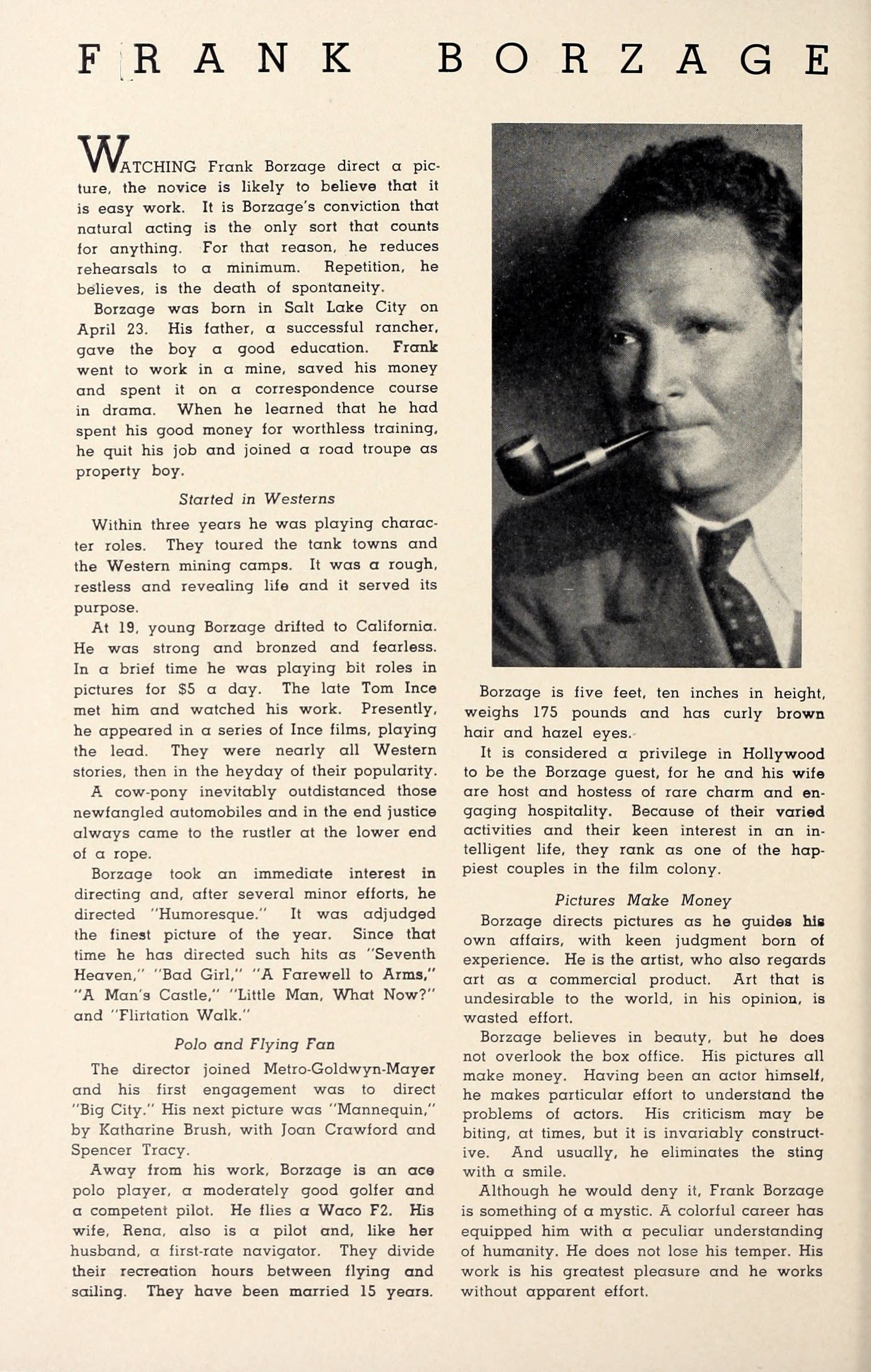
So if I were to do exactly that, contradicting what was foolishly just established, if I swear fealty to anything, to consecrate any ground, it’s that I’m a “B-boy”, a Borzage Boy. “We exist,” he said solemnly genuflecting, but based.
As a Frank Borzage boy, naturally, any motion towards his movies ascending to High Definition, confidentially speaking, gets me a little excited. Home video freaks? We just eat. There are plenty of bees bonneting hot air about whether physical media was shown the door and is limping there, and this is perhaps true. Put that aside for now, this is not about that.
This year has already blasted a pale whale and upgraded another, not as pale fry. The former, Kino Lorber has tauted an announcement for the doomed couple wartime romance in Till We Meet Again, the latter, Warner Archive just unsheathed they are to prime a previous DVD (a copy of which I own) to ergo-blu, the Clark Gable and Joan Crawford pseudo-esoteric religious fable Strange Cargo. Of course we want more but it’s best policy to hold your horses and sport humility.
For some further perspective, Till We Meet Again’s resurfacing in this way is significant because, on top of its far too timeworn obscurity, it is a Paramount property. Strange Cargo was more or less closer to what we might call an expectation, due to its previous availability and how much easier it is for the Warner Archive to manipulate what they own. This is partially why I hold as many torches as I can for Warner Archive, because they seem to be the only in-house organization from one of the Legacy Studios that seems genuinely excited to share what it has in a whole new glow up at agreeable pricing.
Perhaps some of you don’t know, but this is due to Warner Archive being a separate creature not to be confused with Warner Home Video. Warner Archive is not exactly supported by the Studio itself, and relies solely on its own revenue. That they have a long, slack proverbial leash means they can operate as liberally as heaven or hell allows. FYI, a recent horse’s mouth testimony reports WAC’s revenue to be up 60% as of last year, a good sign for all.
That said, Universal has released many of its less-celebrated 30s comedies to Bluray, and Sony has secretly inserted silent film restorations on Bluray as well. Columbia Pictures, a Sony property, let the UK’s Powerhouse films release many of their classic films, Noir (and Horror) by the way, in many editions. The point is that, aside from Warner Archive, and to some degree Universal (MOMA has a big Universal Western series impending) due to a large, years long licensing agreement with Kino Lorber (I believe it has somewhat expired at this point), it is like pulling wolverine teeth to get studios to do anything for the home video market. The jury is still out for 20th Century Fox a la Disney, whom laid off a lot of staff and semi-permanently ended all home video releases for the near future, closing the vaults even tighter. Moving on.
So I conspire. It might be beneficial, though I’ve already written about Frank Borzage’s films to an alarming degree, to arrange certain extant stuff concerning him and his pictures in this place, here. Some of these I haven’t before. Call it cartography, as it will commit to parchment, in its own way, what and where and when certain ideas became inclusive or modified or coded. Though, really, its to spray my own Dark Gospel. Just like a damn apostle I have to share how close I am to God.
It started with a siege of Man’s Castle, a pre-code bastard. For many it will mostly be remembered where Spencer Tracy verbally abuses Loretta Young, and you can also see Spencer’s bare ass. Those titillations. This is self-gassing, as it was recently restored with a few minutes of missing footage that I haven’t seen since I first did in 2018. For the record, it was sort of baffling at first blush and I looked down upon it. Nothing’s certain, but by the time I revisit, it will most likely inspire whistles rather than raspberries.
Though I would see Ultimate Classic and first Oscar winner 7th Heaven on the way, the definitive personal turnaround was History is Made at Night, a picture that was virtually unseeable for decades (that same old story) until it was restored and published in the Criterion Collection. Jean Arthur is one of my most precious actresses, and while it is not her favored material (true to her stage name, she preferred Jeanne D’arc), nevertheless it displayed a luminosity unique to her, and so, unique to the picture. Under the Borzagean aegis, the J’Arthur dowses poetic intimations in all night barefoot waltzes and conversations with the Latina hand puppet Coco, as if coining new ineffabilities. It was over for me.
Some influencing, some contextualizing, useful texts:
https://www.sensesofcinema.com/2003/great-directors/borzage/
CRITERION CHANNEL SUB REQUIRED: https://www.criterionchannel.com/videos/farran-nehme-smith-on-borzage
https://www.tcm.com/articles/203368/frank-borzage-profile-directed-by-frank-borzage-5-25
https://theyshootpictures.com/borzagefrank.htm
Start the Beguine. This will be by chronological release, but this won’t be linear, by the way. I don’t have that much time.
The Pilgrim, 1916
This time around the virtues of The Pilgrim were much more open than the first time, and now having seen Ford’s Straight Shooting I was seized by how similar they were with the central “emotional hero” that was so new to the Western in the teens. This type is often accredited to Ford but it makes me wonder if Borzage in his way gave a rudder to Ford & Harry Carey, both this and Straight Shooting do some precedent to the strata of psychological hero in the 50’s Western. I’m recanting that Borzage was a striking, subtle actor with a naturalistic style similar to the “method” spearheading John Garfield, James Dean etc, which forces me to consider Norma Talmadge in The Lady doing related strokes. The Pilgrim also has an equilibrium nearly unmatched by most of his later, more studio monitored work.
It signals my mistake initially considering The Pilgrim a one note, teens era silent. In reality it already subverts the usual structure notes for just general moviemaking: the overall eccentric texture (The pilgrim’s mule familiar whom he sleeps outside with, the “Yep” exchanges, tourists delighting in the West spectacle, perhaps in condescension, while the Westerners simply deal with it) the main dual-drama (love interest and bad guy) isn’t revealed until halfway through the picture, the villain is in play for less than half of it, no big shootout, the only fight is obscured, the consequences of which the hero answers to by nursing his injured opponent, and the hero loses the girl, condemned to his class and wandering. It baffles me that something this early creates drama through anti-drama unobtrusively.
Nugget Jim’s Pardner, 1916
Between his three only surviving shorts (of 18), I don’t really know which I like best. All contribute to the addition of a new particular dimension to the Western at large, where the spiritual and the psychological are entwined, to a gray area, whereas prior they were mostly battles of good and evil.
Borzage’s humor appears, and in The Pilgrim the Nameless wanderer exchanges a series of questions all with “Yep”. Given how few intertitles are in the entire thing to have this exchange be so many in a short amount of time lends a lyrical comedy. Borzage as an actor strikingly resembles the performances of Brando and Dean.
Back Pay, 1922
Seemingly simple, absurdly beautiful movie finding Borzage affixing a mature style, what would infuse his string of silent masterpieces, 7th Heaven, Street Angel, Lucky Star, Lazybones, The Lady.... this no exception in that lot because of that, but weird because those, the late silent ones and even Liliom, are distinctly Murnau influenced yet this is quite on par without, even without the moving camera; it sits still, yet with solemn kinetics, haunting snaps. Thematically for Borzage a little off-key from his future crystals, this with its sustained ambiguity, indicated however from assorted imagery and the intertitle scenery. He takes a convention, a small town girl drawn into big city debauchery, and brings it to the Borzagesque redemption sweet spot we all love, yet again the closing is scorched with nuance and suspended closure while seeming all wrapped up. I couldn't shake that Seena Owen looks uncannily like Margaret Sullavan.
The Lady, 1925
Just put me down
First of all thank you Pordenone, I will make it there one of these days.
From there this is to say that this is not minor Borzage, it’s major Norma Talmadge. At that I hasten to mention Frances Marion, her writing is integral. This film should be enough for twitchy converts as far as Norma is concerned-- it’s bottom dollar one of the great silent film era performances, supremely advanced for the mid 20s.
Perhaps it lays it on a bit thick as its on its way out, though if you find fault in that especially with just how right Borzage stages the elements and Norma’s whirlpool idiosyncratic style, very adventurous for her in comparison to what she’s known for exampled in the other festival online portal offering, Yes or No, there is a glitch in your heart. I was mud, I was a husk of a bottom of a barrel.
Additional note: This is one of the intersections of Frank Borzage and William Cameron Menzies.
Street Angel, 1928
If there were any questions of how Murnau that Borzage was in 7th Heaven, Street Angel was already past that. Certainly, Murnau’s influence is here, foretelling of Ophuls, and this is where it no longer feels anything but Borzage. It’s old fashioned, and harping the one string from other essays is Borzage never was in fashion-- it’s unrealistic, or it doesn’t work. Street Angel I like more than 7th I think because it’s more focused, the earthiness more koozie, a more breath taking, comfortable, confident gait (impressive how much the camera moves in this) with the long take, tracking, intense zooms, lyrical shots gauzed by shadowed period urban jungle and sirloin fog.
Bears an interesting strategy in by the end Gaynor’s whole story is still unknown to Farrell, it is not needed. A small very clever detail comes early, when Gaynor hides from the police in a busted drum, when the camera cuts the drum is restored with a new decal which is Gaynor’s likeness in the same position on the side.
I’m not one who would know what would be a shacklebreaker for anti-silent movie people barring the comedies, this might be one of them though.
Lucky Star, 1929
Beyond. Thinking about this while writing gives me chills. An apex of silent cinema, a full realization of what it could do also coming off sort of sadly in the rearview mirror. It is just another reason to lament it went to dusk. Borzage pares the more complex stories for a less cluttered fairy tale. The set design is really incredible, so hayseed you might find dirt on your shirt from looking.
It is a perfect film that scraped me deep down, I recount too many points I was violently responding, whether it’s to Gaynor’s eyes moving like a river, or Farrell’s whimsy and his “gran” sacking of the role, all the way to his flight in that ending. You absolutely must believe in love.
They Had To See Paris, 1929
They Had to See Paris gives oomph to the argument in the existence of Actor As Auteur, or somebody who shapes the mise-en-scene around them by simply existing in the frame. It is remarkable that we had someone like Will Rogers, someone so powerful to American culture that directors like Frank Borzage, Henry King (State Fair), and John Ford had to resort to the minimum, only to provide foundation, get out of his way and let him do his thing. It is to those directors' credit they had the sense to do just that. For They Had to See Paris all the Will Rogers scenes are swell, while the rest at best are digestible.
Liliom, 1930
It’s not likely we will see this story again in popular culture, and as far as I know, the films, this version by Borzage, the other in 1934 by Fritz Lang with Charles Boyer, are difficult to acquire (this Borzage I came upon by pure accident, thank you to whoever you are). For certain, this might seem a difficult project to consume for modern viewers, but in a way, for reasons I hope I will make clear(er) it will be more meaningful and important as it was for me.
From the very start it seems completely alien, compounded with Borzage’s type of care. It’s melted with a larger curd of silent film senses, expressionistic as accent in favor of unifying the whole. Paring itself down presumably for budget reasons, it seems closer to the broader idea of Romance while further away from melodramatic, while it’s right there the entire time. Everyone speaks politely, waiting for everyone to finish their lines, there’s dead space. It should be completely boring but it really is charming, like watching an alien walking around trying to talk to people. It’s 1930, yet Liliom is free and clearly excited to stretch the medium and share with you its world from the gates, and even when it’s still, the way it’s photographed it keeps you there. It’s hard to keep Murnau or L’Herbier out of your mind, the limitations at the time don’t seem a factor here.
Liliom is a barker at the carousel, played by Charles Farrell who most people seem to despise at least vocally in this role but he is handsome and settles in, and to me was a stretched-out sexy Bert Wheeler, Popeye, and Artie the strongest man in the world from The Adventures of Pete and Pete all rolled into one. Again like the much of the movie, he is caricatured but feels natural. Liliom is a womanizer, infantile, confident, brash, doesn’t care what you think and loves being an asshole about it. He has a short leash held by Madame Muscat, a powerful gypsy MILF who’s envious of how much attention Liliom gives everyone but her, becoming a villain but not a flesh and blood one.
The emotional, spiritual weight of the picture is in Rose Hobart’s Julie, a servant girl working for little pay at the nearby brewery. She’s armed with an intense devotional stare with various nuances like a painting of a Christian saint, her motivational clarity laid bare. The two fall in love and escape to a beer garden. Julie winces at her drink to which I laughed out loud for various referential, retroactive reasons but also because of her obvious virginity, she works for the brewer but has never had the supply. She looks at him smiling through it and says “It’s bitter”; a foreshadowing and thematic parallel.
We have two playing fields, the mid-summernight burlesque Hungarian carnival, Liliom’s world, and the “real” world, autumnal and mycolic, decaying. The beautiful, effectively spendthrift characteristic of this picture is shown in that carnival through the window of the other, always sparkling, and at certain points capitalizes Julie’s various isolations. She continues to choose Liliom, a confused loafer and moocher, over the constant pest Carpenter, a carpenter who vies for Julie’s companionship (later in the movie its suggested he does this for 10 entire years once per week) who is more of a Dickensian ghost, a nuisance that appears once in a while to merely challenge and be rejected, and Liliom pushes her away because of his inability to face her while steeped in his overbearing self-loathing.
The visual buildup leading to the flair of the final act is logical, and we’re introduced to a very early 20th century film vision of the afterlife. Liliom dies during a botched heist he agrees to with the dream of a secure lifestyle with Julie and their impending child, and is sent on train to a Snowpiercer like purgatory, a train that never stops hustling through the clouds. Liliom sort of defies the expectations of the representatives of God, and he is somehow granted the honor of seeing his family one last time, but not before going to Hell for 10 years. Oh yeah baby.
In more ways than one, and this is where viewers now will drop their jaw, the film in this act basically says it’s “Ok” to “beat your wife” and “as long as you love them”, and in the ending scene Julie says this even more explicitly, but in a feat of juking dynamism, it’s actually tenderizing and lovely. Yeah. It’s complicated, and it needs to be stressed that at one point abuse like this was historically, culturally true and normal.
However, where Liliom differs to other films with this in mind is that instead of becoming brittle over the last 90 years, it has sort of gotten more powerful in spite of that. To me anyway, and in no less gratitude to its Pre-Code nature, it seems more bold in its exploration of the dark side inherent in relationships and love and violence, in various points the characters impulsively hurt the other and step back to assess why they act this way. It simultaneously respects and questions the necessity, or the nonsense of body & soul union of two adults. In that final scene as well, Julie says that she and their daughter are better off with Liliom dead because the memory of him is more of a father figure than if he were there. These suggest a connection with Umbrellas of Cherbourg. Here, the couple is destined to be together but shouldn’t, in Umbrellas, they’re meant to be but aren’t, and maybe it’s for the better. Twists on these themes would be explored later in Borzage’s own Man’s Castle, and I expect in others I haven’t seen yet.
Some items of the film I’ve omitted here but I will leave them for yourself to find, should you want to see this. I think it’s one of the most complex early talkies and that I’m so buckled under by this now in 2021 hopefully says enough. It’s so whacko and incredible.
After Tomorrow, 1932
Sometimes even I feel like I'm faking it when I put these to paper, "oh it's just another Borzage", but I had so many violent, tear filled reactions to this without my consent that's beyond understanding, I have no choice. This does not translate very well to modern movie grammar, it is a purity of form and emotion, and a love story actually about love, which may frighten some people. James Wong Howe photography and Borzage in the cockpit is all the dream team you need. Willy is the Goat, Josephine Hull the perfect wretched mother.
Living On Velvet, 1935
This is so psycho I don’t know where to even begin. An “I can fix him” melodrama that’s very senseless, but by that token the pure strangeness of it all is so vastly outlandish, resting between sympathy and apprehension for the outcast, Liliom-coded, that demands notice.
But the thematics are not what excites me here, it’s Borzage’s touch, forcing the bland, conventional setups to bubble. Same with his actors, they all communicate at the same eccentric level which is corny but just beneath corn, and overall bisexual, but their opposing feelings manifest themselves all as conflicted individuals making decisions they know are poor but believe A Change Gone Come even if they equally know it’s just as likely not to. In a way like its characters, the movie’s flaws are its strength. Generally there’s not a lot of love for this one but it’s perhaps his wildest.
History is Made at Night, 1937
Borzage is Love-- there's no other filmmaker that could contend for that; maybe Renoir. It takes someone like Borzage to square it to you bacon and sopping fat, put through the ringer, to show you how fake everything else is. When I wasn't fighting tears, all I could see was 'oh'. A maximal, genre-chameleonic phantasia.
Big City, 1937
The more BZGEs I see it’s cool how individual each romantic couple’s relationship language is, case by case, and how consistently disarming on their own they are. In Big City, it starts with two people who seem to meet cute, obliquely and as strangers, but turn out to be married already.
All the major auteurist notes are present if not as infectious as the more recognized canon, but this reinforces with BZGE movies that situate me permanently to the idea that in the company of people and the foundation that are right for one, specifically to them, makes one blossom into their essence, one of capital G good, so it became an axiom. The community’s efforts to protect Romantic love are so funny: a cabbie buys a bottle of milk intended for a newborn expected from Luise, who is on the lam at that point, that he’s forced to consume entirely which is in a long take, to save face from some thugs tailing him to protect giving away any downlow operation.
It’s always awesome when movies long past feature cameos of their time. In Harold Lloyd’s Speedy it was Babe Ruth, here, it’s a reach of legendary prize fighters.
Three Comrades, 1938
“There’s fighting in the city...” The final line lands with a thud. It is not a flub, it is an anticlimactic dirge as a coda.
What to be said of Three Comrades, in as brief as possible... Borzage films, the double dozen or so odd or even masterpieces, exist in a state of grace, unique but with the best of them in that manner (Mizoguchi, Ozu, Dreyer, Renoir); when we speak of auteurism we tend to speak towards someone with all control, Borzage is all embracing.
Further, Three Comrades’s delicate, mature, sublime intersection of the spiritual, material, social, political, humanist pie pieces, the purity of the imagery as if it were elicited and brought about by the characters themselves as they develop, to and at their dramatic fringes exist (and don’t) only in pieces like this.
We have the Talisman of Baby, here constantly cited as the miracle magic machine that can transport someone across the country as fast as a Christmas Sleigh (at once a plane, train, and automobile, literally and not), the machine the 3 boys rely on for their life, expended in service of Love and therefore transformed. Margie Sullavan, who is tackling the Hell that is the slow, self-observably slow, death from TB, could have been self-pitying but instead uses her borrowed time for the ultima culmination of the purest human quests and disposes of it for the same reasons in a mysterious stroke.
What makes Borzage so personally exciting for me, the peak, aside from the works themselves and their anomaly, or how the work even reached its place, is how difficult it is for me to really explain what they are, despite having seen most of them, despite having gluttonously consumed all the literature I can find about his movies to help up my arsenal. Perhaps the swirl of these elements collide unsatisfactorily with what my meditations pang, wish to say, which is ultimately a gumbo of unspecified awe, over and over, which inevitably results in this slop, and this admission.
In short there’s just nothing like these movies, there is no adequate corporeal language to sell it, or transcribe, or translate it cleanly. And, while not having seen it and only trailers at the cinema, I think of how hard things like Life of Chuck (at least how it is being sold) want to assert to you they are life-affirming lovesongs in a scraping way, but nothing ever-never so far, decades after, has come close to the empirical complexity nor the erotic-psycho-emotica blender of a Borzage.
I’d already seen this movie once, but this time, after I went to bed I was seized with a brain and body high and a suffocation of thoughts about the movie, hours after I’d seen it. Fragments: I remember Monty Woolley, whose tomahawk of a Doctor seems almost defiant to the tone of the movie, a small episode but adding echoing texture. I also remembered the man in Alfons’s with the eyepatch, another discarded comrade, specified by Otto. We’re usually meant to believe someone introduced like that would disrupt the plot in some way later, but he is only in one other scene, silently drifting.
The Shining Hour, 1938
Every time I look at a Borzage movie page on here, before I’ve seen it, and it’s marked with responses that run the gamut (settling on “mid”) I’m drooling to see it. Especially the signifiers like “dated”, “annoying”, “ridiculous”, and the baffling “zero chemistry” telegraph this will be a hum dinger that will absolutely fuck me up, and well.
How one can overlook how mature, meditative, and exploratory this is is beyond me. It’s moral, but it’s not a scratch holier than thou. Perhaps it’s how on the dime and amorphous the tones and structure resituate moment to moment. It’s this slippery filmmaking that later Borzages would continue to do, and likewise escape rapport and honor from audiences now. The dialogue is astoundingly tight, it’s acerbic Joe Mank freed of dry cynicism. It is consistent with Borzage’s auteurism. The cast is all incredible, nuanced and confident, even Hattie McDaniel’s character is instilled with an unspoken acuity. Sullavan and Crawford do all the lickings here of course but I find nothing in the others that is unprofessional.
Once again it’s something I can rave about endlessly but will never be able to describe exactly what all the pieces, nor the whole, elicit without the other side of the conversation being sensitive to it themselves, but even then who knows.
Disputed Passage, 1939
It always gives me great pleasure to be in a position where I am cornered to reduce my, while spirited to write much more about and lack the acrobatics, comments on a Borzage ride to simply just "insane movie".
Strange Cargo, 1940
A boggling entry-- it's really hard to find words to describe what an adventure this is, other than it's there in the title. That Borzage and Mank slip in the central character without any exposition before he starts working his prophetic nuisances is grand. From a normal nasty prison break movie as Pre-codesque into a bugaboo mix of ghostly folktale as gospel is hardly even the beginning. It's Christian insofar as the surrogate approaches the convicts with the seed of repentance and is otherwise spooky and complete Borzage, it could be nobody else. One of his best, and even visually bare minimum another great argument to bring more Borzage to 1080p.
Additional note: Well well well, I am soo blessed.
The Vanishing Virginian, 1942
Like the synoptic gospels, it is an embellished account of a mythic type scion of virtue, this amidst a spirit of Midatlantic Americana. The nostalgia or rather what one could call its sudsy portrait of the past, is nevertheless pretty sweet. It explores the suffragette movement, on top of various contextual Virginian topics within the time.
A scene within, like several, defies a simple unpack. Robert Yancey (Frank Morgan), the DA and the film’s namesake, is forced to oppose a local black man in court he’s known his whole life, who is being tried for accidentally murdering someone in a fight over his wife. He finds this position distasteful, yet his personal loyalty to the law corners him into prosecuting. He half follows through, noticing during the trial that he is being pressured by the court towards a conclusion he does not want and improvises his way out to warpaint blackface using a nearby inkwell which releases the tension of the court and he is held in contempt and removed, to be replaced with an inferior prosecutor which results in the verdict of manslaughter and jailtime rather than murder and the rope. It is a bizarre scene, and handled more tastefully than one might think just reading about it.
Difficult not to pit this by Ford’s similar pictures and Tourneur’s Stars in My Crown, it should stand that they are not all that similar. The major overarching theme is something more of a folksy Tall Tale, Johnny Appleseed recall in the vein of typed person in adaptive acclimation from old world to new, the resistances and compromises, more like Ambersons, another family saga. A curious element is the approach of cross sections within this family tree trunk, the viewer is very often witness to bursts of varying opinion from all sorts of characters throughout, and as angry as some should often be with each other they usually laugh it off, or treat it like a casual exchange rather than fighting words. The family accepts each other even as they diverge in sometimes broad, drastic ways.
Another scene, which hasn’t much to do with the big progression of the story, is an explosive episode within the household when one of the Yancey lads finds an opportunity to be naughty and tries a forbidden cigarette, becomes sick from the smoke which brings the doctor over, is almost red handed with it and tosses it away which causes a fire in the house. From this kind of framework Borzage delivers one of the most screwball scenes he ever attempted and really piles on yet another strange, invigorating scene that has to be seen and felt.
One final story related note is the character of Uncle Josh, Robert Yancey’s lifelong friend and household attendant-cum-male-governess, his honest devotion to the Yancey children, his family and his friends throughout the years in this make his tragedy and the celebration of his life displayed here in one of the mightiest, quietly poetic scenes, it really tore me up.
Beyond that, Kathryn Grayson. The harmonium moments, sometimes musical, here are again perhaps embellished and untrue, but come on how could you hate this.
Seven Sweethearts, 1942
I'm a sucker for this so there's personal sway, nonetheless underrated. Through the Borzage of mirth and magic, the dwarves are now Sweethearts with boy's names in a Professor Layton Dutch burg that apparently is always content, traditional, and locked in time. The rainy car scene with Billy and Henry is over the moon. Complete with as far as I can tell, undubbed singing from operatic angel Kathryn Grayson. Incredible.
His Butler’s Sister, 1943
The closing passages of this supposed-to-be Durbin treacle car are like watching God being born. Shy of the Borzage usual signatures in the overall profiling and his interests, but I also think that this hits his other talents, without intrusion, bare, on the nose for this kind of movie, and the expectations of a fairytale Durbin vehicle. Examples of this are most present in the simple conversations, and it’s hard to look past the craft, the visual, and all the players.
Additionally, even with some sort of slop in the story, I don’t think you could have made this kind of a picture, by textbook any better (DD movies I’m only sort of aware of but this has given me some zeal to see them), and it instills a Great Passion, an infusion of I’ve Always Loved You into Seven Sweethearts.
Till We Meet Again, 1944
Borzage uses boundaries (French nun, married American soldier, German occupation) and contradictions (dogmatic, role shift from nun to protector of the soldier, exhibiting qualities of the other female archetypes she meets, veneration through vow betrayal) to plot the psychological cultivation of two people into versions greater than themselves.
Visually awesome in its austerity (DP Theodor Sparkul did several Lubitsch German silents, Renoir’s La Chienne), with the added layer of authentic (bonny, unknown Britton replaced the initial cosmopolitan Maureen O’Hara) all while riding the uniquely Borzagean skill of tonal morphing on dime after dime until an explosive conclusion, where the water and the stars meet glued by sacrifice. I don’t know how they got away from the Breen office with threatening an agent of the cloth with sexual assault so bluntly but they did. Only Borzage could take a scene like returning a baby bird to its nest and turn it into gospel.
The Spanish Main, 1945
Paul Henreid’s baby; after shopping The Spanish Main around the circuit he finally found it a home at RKO, and watching how much he organically loves it is huge. Borzage and Henreid must have also had some childike fun at tugging with the censors, I’m reading most of the cuts were just from those alone, but they still got a chunky amount of the eroticism remaining.
So, it’s obviously an assignment and a style/genre exercise for Borzage, whom O’Hara selected to direct her in this. There is consistency to his pictures of this kind, this is no exception, where one can detect his signature microbially, romance glow scenes aside, substantially so, if one is used to him, and a surprising amount of his typical themes coalesce in this out of type picture, but it is also a really solid lusty briner with the crossed swords of high adventure. Adding O’Hara to Technicolor is always explosive, and the story is timeless. Walter Slezak is obviously typecast but he was just so damn good at a cruel authority with dozens of gluttonous vices and unscrupulous treachery, and has most of the best Herman Mank lines. All delight.
I’ve Always Loved You, 1946
Like all Borzages to me so far, it’s so very difficult to put into words, they are so incredible. Perhaps my viewing habits with Borzage are in part because I get seething he’s not more revered popularly even though I love to keep him like he’s mine alone. Or like they’re secret weapons I deploy to myself when the time is right, and I fear they will some day run out of a fresh Borzagian experience. “There’s always another Borzage” though and I shouldn’t worry, but still.
I must admit this one still escapes me, to its benefit maybe as per mysterious ineffability, all the same I hope I’m brought to it again and again and again in the future. Even its corny soul-linked manifests such as one piano playing affecting the other worlds apart are done so honestly with no pessimism or condescension that it always works, even if it functionally carries nothing, or seems to. Also I really love corny done right proper. At the very least it’s such a beautiful movie, reminding me of Renoir’s The River, a closely favored of mine and as Borzages often synchronize with other Renoirs, enormously affecting in all sorts of ways this type of story wouldn’t with other people. Haven’t even gotten to the sets and the color which are astonishing, and its consuming 2 hours whizz by like nothing.
Magnificent Doll, 1946
Apparently the only major bio-drama of Dolly Madison on film, this one belongs to Ginger and her costars, mostly Ginger, and like the title puts her in environments, company, and gowns that are immense and insane. The usual magic isn’t as intense or clear as other ‘Zages, which can be disappointing, though it shouldn’t be as a put-down as it is directed incredibly well, especially in those romantic scenes. A great example of Ginger’s dramatic abilities, once again playing young to old like only a few stars could in a, not “authentic”, satisfying way that works for its “believability”, there are notable tone shifts throughout to be reckoned with.
David Niven’s wife at the time innocently died in an accident the day before shooting, the consummate professional doesn’t betray such a tragedy; it is a fantastic performance of a complex, complicated character given more particles from the script, in him which the dialogue glows. His triangle foil in Burgess Meredith is proper too, he’s another real deal, his grasp of lines and scenes seem to ferment as you watch, his screentime is overall fewer than the formers but he really sinks in.
It’s not about historical truth, though it certainly is in some places and also who really cares, maybe not even emotional truth altogether, or love conquers all, Doll is more related to the duresses of I’ve Always Loved You, which he did the same year, which is in a way the split between loving someone for their art through that art, and a more “decent” person who is perhaps boring and nerdy, or in other words, the seductive Bad Boy loses.
That’s My Man, 1947
Don’t remember where I read this but in several instances some critics have put down Gail Russell and Cat McLeod, the Republic female top stock of the time, as lesser beauties which I full stop cannot abide by. Somewhat of a companion to I’ve Always Loved You, with lots of horseplay. Surprisingly good, low key but technical, with a zillion eccentric shots in simple contexts that are elegantly strange.
Told in several frame story flashbacks as the benevolent Taxi Driver cum careholder/governess/observer who is altogether mysterious: he says he has 5 kids (doesn’t come across as a joke but could be), but the one time we see him in his home he lives alone. His friendship and faith with Ameche/McLeod seems to be where his self-imposed purpose is. He’s fun.
Ameche (who I much enjoyed here when I historically have not) embodies a leaf in the wind much like the main man in Living On Velvet. He’s not cruel on purpose, but he lives wanting normal things and still doesn’t play by those rules. He abandons his cushy job to “live by his heart” and basically on a pocketful of miracles. He buys a colt, believing he can train it to win at the tracks with Love and Respect as fuel, the introduction of these elements is a resolutely strange and funny occurrence.
The description on here suggests (the Little Man What Now? letterboxd description is so bad by the way) success misleads him, but the movie doesn’t confirm this, as he never quite abandons his drifter personality while his girl craves a compromise between that and stability (Man’s Castle). She may seem foolish to modern audiences, like in I’ve Always Loved You, or Kay Francis in Living On Velvet. They do endure a man’s flights of fancy which leaves them in a bind during important life waypoints expected of tradition (birth of a child, staying home at all) which may seem like weakness, but compassion from both parties wins overall. Borzagean women are consistently strong.
Later Frank pictures find him confronting more and more complicated nuances in relationships that, in my opinion, do as well as the noirs he despised, while going the other way, often adding more philosophy and confronting certain darknesses impossible for noir.
The horse acting in this is great, and there’s an early moment where the horse kicks a chair completely across the room that was more shocking to me than anything that’s happened in noir, or most horror for that matter.
Moonrise, 1948
Many of Frank's films it becomes difficult to place to terms, at least for me, as to what they are without what bodies like some betrayal to myself, or inaccurate. They feel like such delicate matters simply part of an aether I do not understand yet, collect like a handful of sand that falls apart, spiritual experiences, there a moment then gone. Moonrise is a movie with very little practical, common sense but emotional, faith and salvation sense, a chord of the unlimited. Some part of me feels regret, or a form of guilt, that it's this, his darkest film that retains the most muscle to 21st century audiences. Regardless, it is one of his singulars within a world of masterpieces he can claim, the antithesis to his personal convictions but he strangles right good, and to the heart of the matter more cleanly than most, yet not without his own insignia and subversion. Fluid and mysterious, this viewing escaped how my first felt, in short, and I anticipate with even a fraction of my getting older, will precipitate yet another unexpected shape.
China Doll, 1958
Killed me. Mature is an odd choice for a Borzagean lead (many were, come to think it), Borzage coming out of a 10 year break (not from lack of want but support and a project he liked, this was one on his desk for years) but Borzage deconstructs Victor Mature’s “type” and believe it or not, drives a nuanced performance into the tofu.
This was Li Li Hua’s first and only American production. Already a famous star in China with her own production company, at first, like much of this picture including the title, she might seem exploited and stereotyped, but I think its there merely as setup to be, not necessarily bucked, but transformed. Their faces. There is a language barrier between the two, but this reinforces a Borzage weapon in that language in the presence of the omnipotence of love is excess. Again, their faces. Borzage never failed in raising his characters into heroes of joy, even the intense right-wing Ward Bond has a delicate, compassionate, absorbing act. The ending sequences are shockingly bananas.
Above all it says that Borzage, even in an “old man movie” with a damn it all in the face of an entirely different moviemaking environment and audience expectations, stuck to his guns as mission statement, retained his auteurist profile, and the signature of an authority, to take a set of tired conventions and without trickery and imprint something personal, something bogusly nuts, and innocently, erotically spiritual from virtual nothingness; a tiny budget and 5 weeks shooting. He had nothing to prove, but what he had to give is undeniably infinite. Even in a “minor” movie we’re all the better for having it.
Intermission……
Just kidding. That’s a wrap and that’s well. So, what’s there to “learn…” ? Well I realize it is recommended for one to have seen them themselves. From there, what speaks to me most is a lot of naivete, the reasons for are well documented in as many redundancies in style and ideology. Kneejerk, kneejerk, kneejerk… It speaks to the limits of (my) language and perhaps the limits of (my) understanding, despite my (my) allegiance. Always hardly working. Maybe one day, the words and the tact of persuasion will make itself known to me, or at least to improve how I write. But at the same time, the mystery was always what drew me, so that’s the perennial challenge. You go into the mystery. At the very least, I am thankful for journaling and revisiting, and it bugs me to write more. Not necessarily about Borzage, but just to do it and improve. For fun.
Anyway, whether this finally relented salvo persuades you to see the treasures of Frank Borzage, The Greatest Romantician, or not, perhaps there was something to enjoy in there. At least for this hairpin, it means it’s time to see everything all over again.